
catalyst partner page
Winchester College, one of the world’s most prestigious schools.
Now offers online programmes to students age 10-17 from around the globe.
CATALYST by Winchester College:
✔ Rooted in 600+ years of world-leading education
✔ Strengthen secondary school admissions
✔ Ignite curiosity and a love of learning
As seen in



Online Summer Programmes
Foundations (ages 10-13)
Foundations is about getting the basics right. It helps younger students build key communication skills, making them confident learners.
Dates
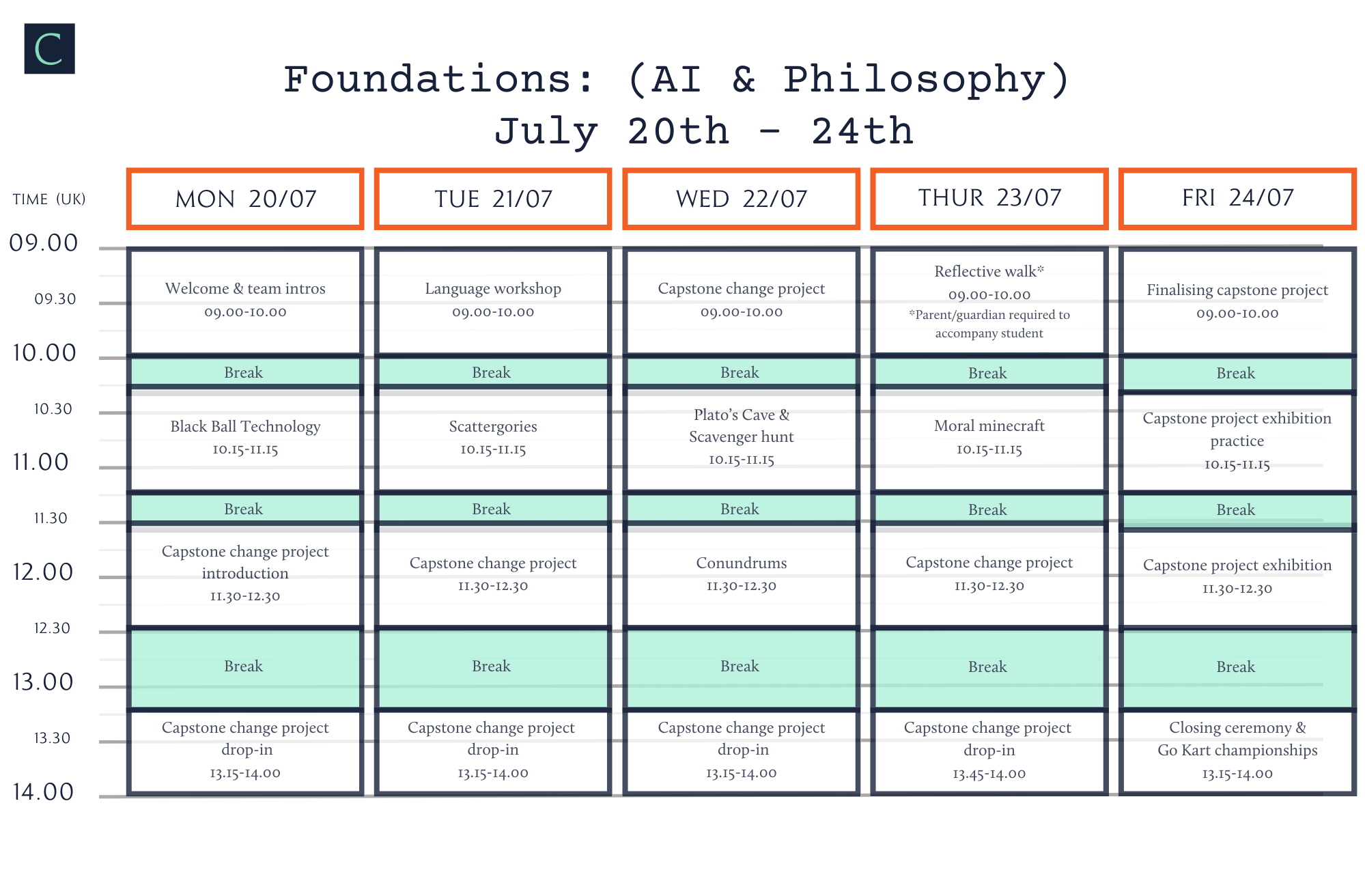
July 20th → July 24th (AI & Philosophy)
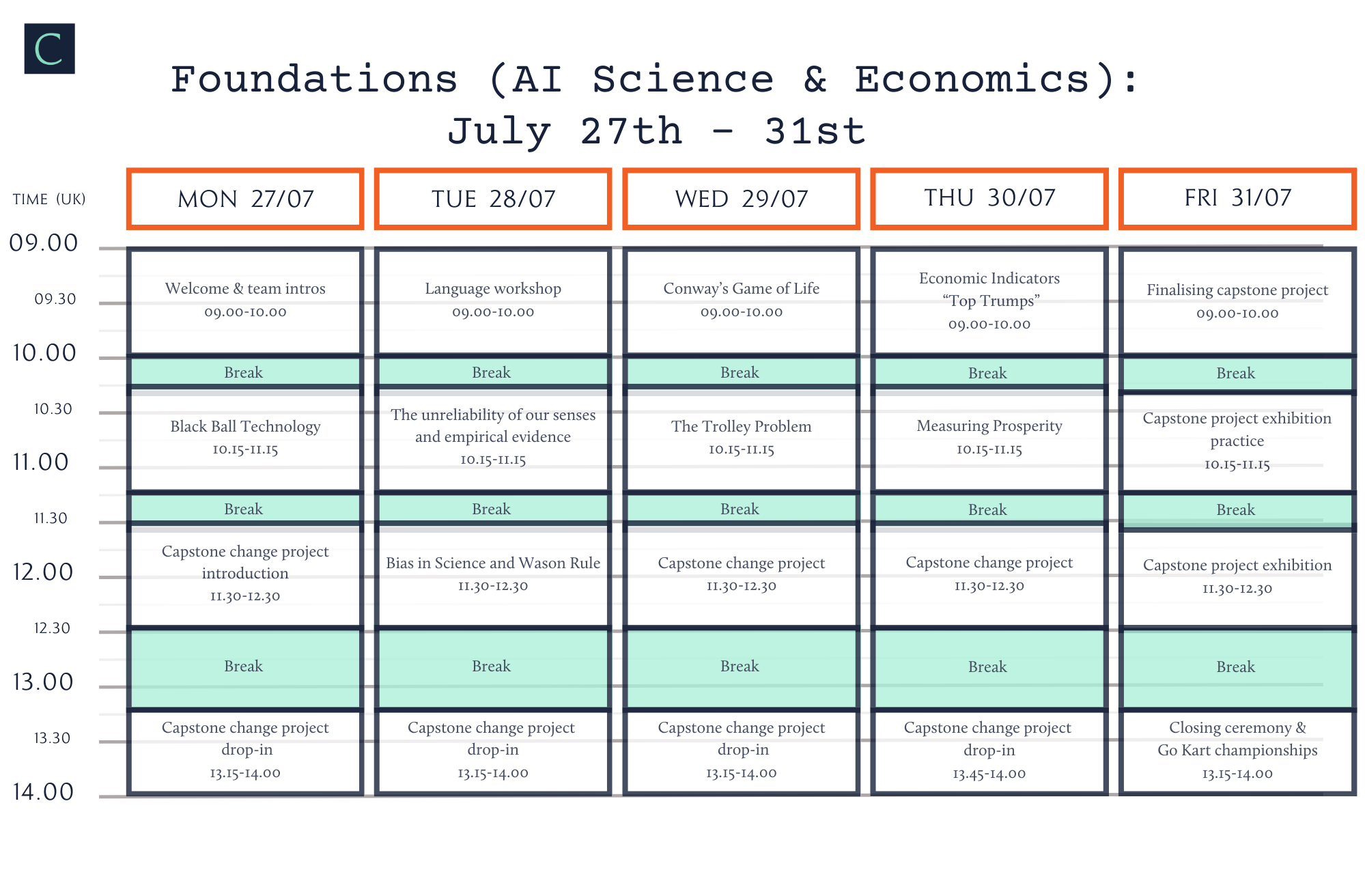
July 27th → July 31st (AI, Science & Economics)
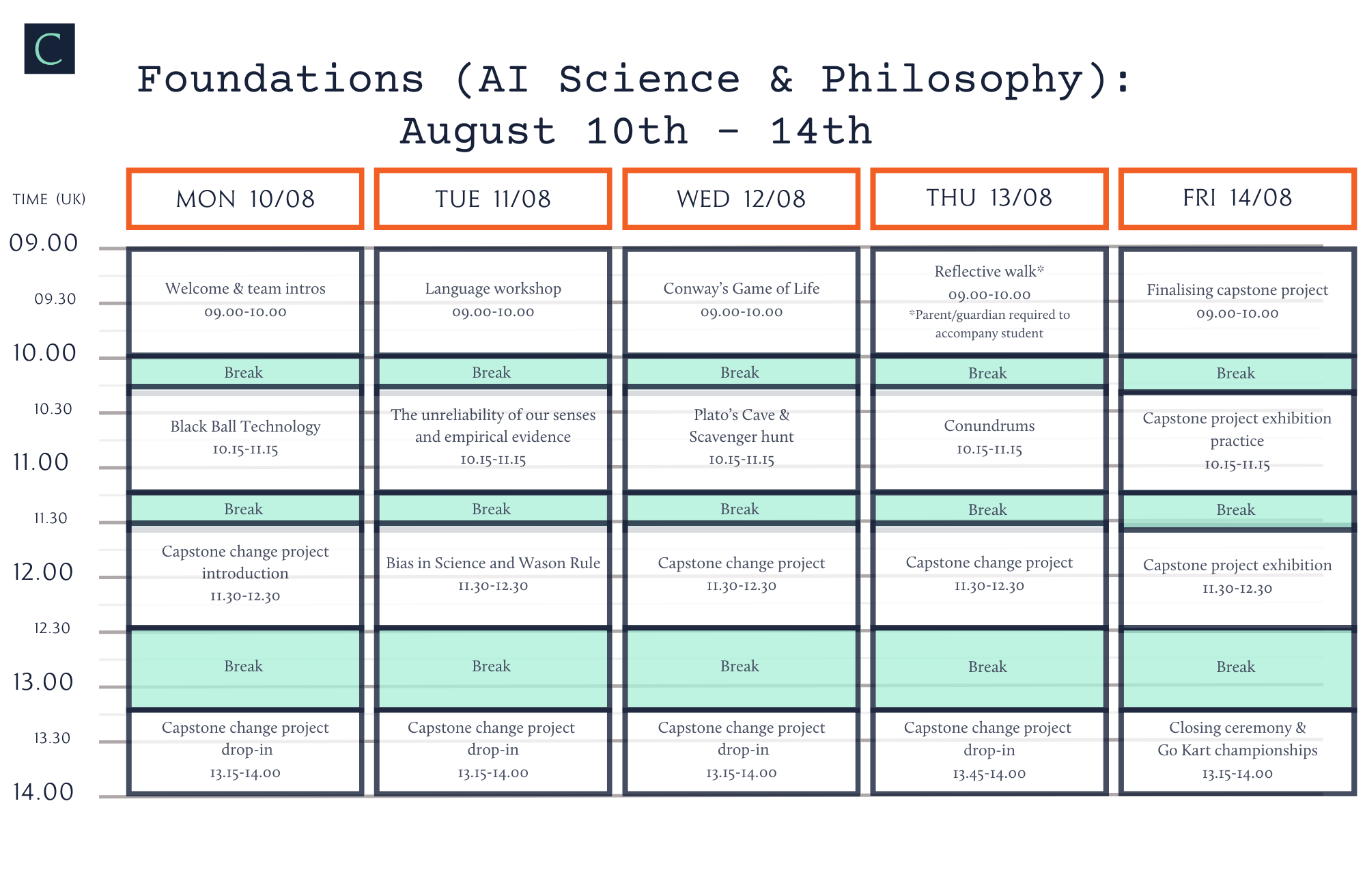
August 10th → August 14th (AI, Science & Philosophy)
Price - £1,925
Horizons (ages 14-17)
Horizons challenges students’ communication, collaboration, critical thinking, and problem-solving skills, setting them up for success at university and beyond.
Dates
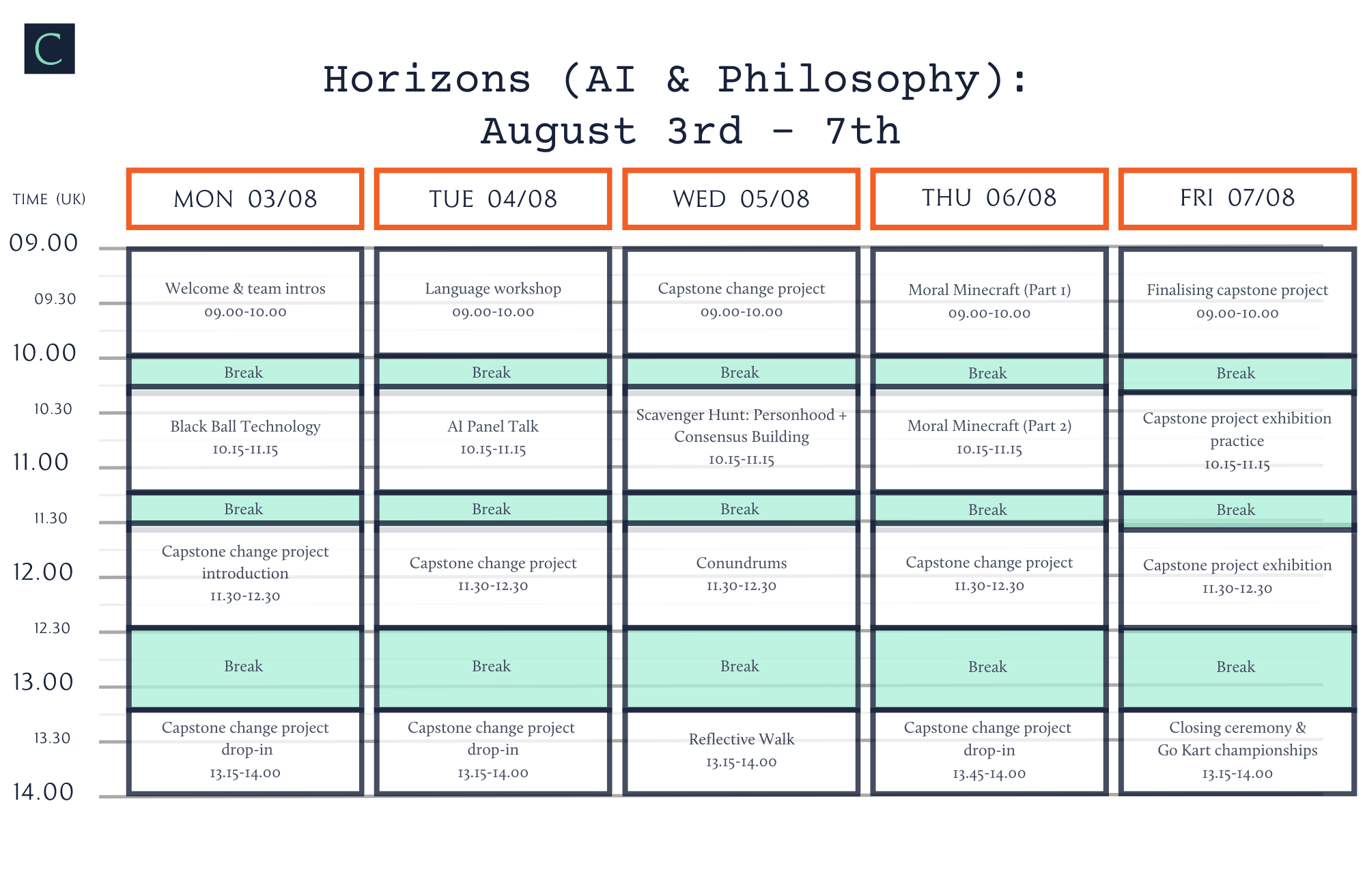
August 3rd → August 7th (AI & Philosophy)
Price - £1,925
Module Information
Every CATALYST course contains two core modules and a change project. See below for descriptions of each module.
-
Understand how AI is shaping the world and humanity.
Understanding Disruptive Technologies – Explore how advancements in artificial intelligence, synthetic biology, and self-replicating systems are reshaping society.
Ethical & Regulatory Challenges – Debate the risks and benefits of emerging technologies, examining their economic, social, and ethical implications.
Nick Bostrom’s Black Ball Hypothesis – Investigate the concept of civilisational risk, where certain technologies could pose irreversible threats to humanity.
Live Turing Test – Assess AI’s ability to mimic human language and cognition, questioning what it means to think, learn, and reason.
AI Governance & Ethical Decision-Making – Engage in structured debates and draft an ethical charter outlining principles for responsible AI development and regulation.
-
Begin the development of a philosophical mind.
What Does It Mean to Be Human? – Examine identity, ethics, and society through philosophical inquiry, questioning human nature, consciousness, and morality.
Applying Philosophical Frameworks – Explore Platonism, deontology, and utilitarianism, using these theories to analyse moral dilemmas and real-world issues.
Personhood & Transhumanism – Investigate the boundaries of selfhood, AI consciousness, and bio-enhancement, considering the implications of human augmentation.
Building Arguments & Critical Thinking – Engage in interactive workshops and philosophical conundrums, developing the ability to construct, defend, and refine complex arguments.
The Role of Change in Ethics – Debate how philosophical ideas evolve with society, exploring shifting perspectives on morality, justice, and progress.
-
Develop an understanding of what value means to the world and different cultures.
How Do We Assign Value? – Explore the intersection of economics, philosophy, and ethics, considering how societies balance financial prosperity with cultural heritage.
Ethical Frameworks in Decision-Making – Analyse utilitarianism, deontology, and personal belief systems through real-world dilemmas, beginning with the Trolley Problem.
Economic Indicators & Data Storytelling – Examine key metrics such as GDP, literacy rates, and inequality, uncovering how data shapes narratives about national development.
Debating Well-Being & Prosperity – Contrast economic measures of success with intangible values like cultural preservation and quality of life.
The Heritage Gallery Challenge – Engage in a hands-on prioritisation exercise, curating exhibits that reflect the complexity of value assessment in economic and cultural contexts.
-
Use scientific inquiry to model the world and challenge bias.
Patterns, Mathematics & Scientific Reasoning – Explore how mathematical structures and natural patterns help us interpret complexity in the world.
Modelling & Logical Analysis – Construct real-world models, applying logic and scientific reasoning to test hypotheses and uncover patterns.
Historic Scientific Breakthroughs – Analyse key discoveries from Aristotle through Galileo to Newton and learn how they reshaped scientific thought, applying refutation and critical analysis.
Cognitive Bias in Science – Investigate how bias and perception influence scientific conclusions, exploring ways to minimize error in reasoning.
Complex Systems & Emergent Behaviour – Engage in a live simulation of Conway’s Game of Life and study how simple rules give rise to complex, life-like patterns
-
From idea to impact. Tackle problem, small or large, and develop an actionable solution.
Structured, Student-Led Initiative – Apply critical thinking, research, and problem-solving skills to a real-world issue of choice.
From Concept to Implementation – Follow a structured problem-solving framework, from problem identification and feasibility analysis to stakeholder engagement and solution development.
Diverse & Impactful Projects – Past projects include launching an electronics repair club and developing sustainable menstrual health solutions.
Live Exhibition & Presentation – Students defend their proposals in front of an audience, demonstrating rigorous analysis and strategic thinking.
A Framework for Future Challenges – Teaches a scalable approach to problem-solving, equipping students with practical tools to navigate academic, professional, and global challenges.
Reviews
Video library
Summer 2026 Timetables
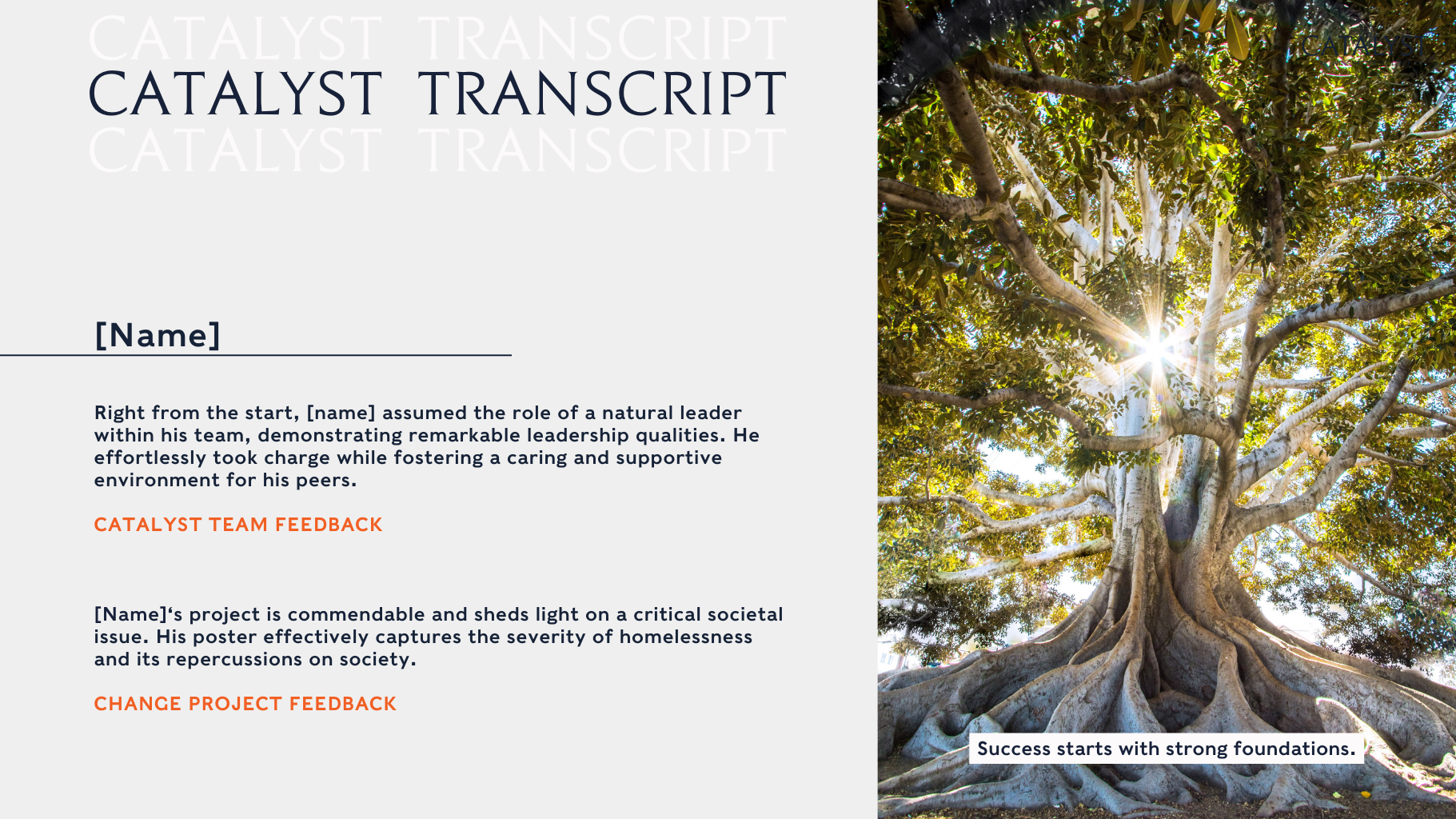
The Catalyst transcript advantage
A CATALYST Transcript is more than feedback, it's a guide for continuous improvement. It offers personalized suggestions and resources to help students enhance their skills and projects, even after the programme ends.
Every family gets a transcript upon course completion.
"The CATALYST Transcript is very thorough and thoughtfully written, I have to say. As a former secondary educator and now academic — and a parent! — I’m impressed with how incredibly detailed this feedback and mentoring was."
- Susan (parent)
Winchester College is founded
1382
Satisfied pupils & parents
Over 450
46
Countries represented at CATALYST
FAQs
-
Yes, CATALYST is part of Winchester College. Our courses are built on the College’s 600-year tradition of educational excellence, bringing its renowned enrichment and extracurricular expertise to students worldwide through online learning.
-
We offer courses in different formats and for varying age groups:
Foundations (ages 10–13) and Horizons (ages 14–17): Intensive one-week courses held during half-term or summer. These introduce advanced topics like AI and ethical dilemmas, culminating in a Capstone Project.
-
Courses are interactive and dynamic. Students engage in discussions, problem-solving, and hands-on projects. A typical day balances collaboration, independent focus, and time to recharge. Activities include ethical debates, real-world problem-solving, and skill-building exercises.
-
CATALYST courses are both challenging and fun! Designed to push students out of their comfort zones, they develop confidence and critical skills. Foundations and Horizons courses are selective, ensuring students are matched to the appropriate level of rigour.
For more information, please visit the CATALYST by Winchester College website.
-
In every CATALYST course, students grow into independent thinkers, creative problem-solvers, and confident leaders. They’ll learn to synthesise and present ideas effectively, excel under pressure, and gain strategies for success. Many alumni go on to top schools and universities, including Winchester College, Charterhouse, Cambridge, Princeton, and LSE.
Each student will receive a personalised feedback transcript and certificate of completion from Winchester College. -
CATALYST courses are taught by experienced educators from Winchester College and other leading institutions. They bring a wealth of knowledge and a passion for teaching to create engaging and challenging learning experiences.
-
The Capstone Project is a key component of CATALYST courses. It allows students to apply what they've learned to a real-world challenge, demonstrating their understanding and skills. This project can be a valuable addition to school and university applications.
-
To apply for a CATALYST course, students can either have an application completed by you as their representative or the family can apply directly via the CATALYST website.